
Collier County Recent Arrest Channels
The Collier County Sheriff's Office, or CCSO, runs the official booking system for the county. Two entry points exist. One is "Today's Arrest Reports," a same-day snapshot. The other is an accepted-terms search that covers a named person, a booking date, a booking number, an arrest record, or an active warrant. An "In Custody Only" filter narrows results to people currently held. That answers a custody question. It won't show every arrest from that date.
Booking is the jail's intake and record process after an arrest. The report can lag while staff finish identification, photography, classification, and database work. CCSO promises no fixed update time. That gap is not proof of no arrest.
| Official view | Best use | Window or limit | Photos |
|---|---|---|---|
| Today's Arrest Reports | New bookings reported for the current day | Same-day snapshot; no promised refresh time | Detail link when available |
| Arrest and Warrant Search | Name, date, number, arrest, warrant, or custody check | Displayed from January 1, 2016 when observed September 7, 2026; 100-hit cap | Photo link when available |
| CCSO2go | Mobile date or name search and alerts | Agency describes ten years of history | Agency says a photograph appears |
The Daily Arrest Report covers the same-day view. The Weekly Arrest Log handles the wider date workflow. Neither replaces Jail Records when a fresh intake hasn't reached the public screen yet.
Reading Collier Arrest Results
The database returns more than one record type. Pick ARREST for booking history, WARRANT for an active-warrant query, or BOTH when each kind matters. A warrant row is not a new jail booking. An arrest row can stay online after release, and the custody-only box narrows the list to what CCSO reports at that moment.
Missing rows prove nothing about booking, release, or transfer.
Broad names or wide dates can hit the 100-result cap. Narrow the search with a first name or birth date. The booking date or number helps too. Match the identity fields carefully. A shared name or familiar face alone identifies no one. View the official CCSO Arrest and Warrant Search at its source.
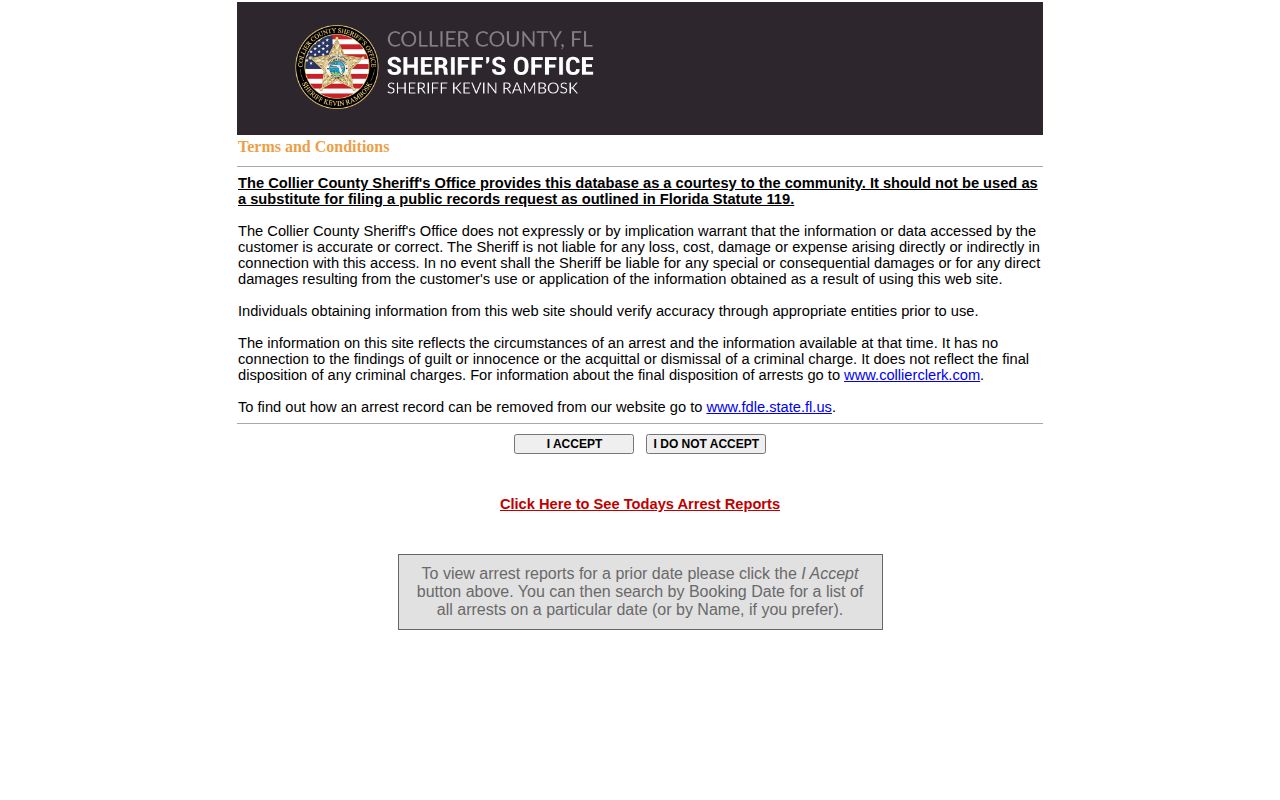
The screen shows why record type, custody status, and date must be read together.
Collier County Jail Roster Search
Collier posts no standalone current-inmate roster. The CCSO search becomes one when "In Custody Only" is paired with an arrest query. Naples Jail Center and Immokalee Jail Center share the same county system. A city arrest does not decide housing. Someone arrested in Naples may be held in Immokalee, CCSO notes, and the reverse happens too. Placement depends on needs and safe, least-restrictive housing.
| Search field | Purpose |
|---|---|
| Name | Starts a person search |
| Date of birth | Separates similar names |
| Booking or arrest date | Finds a known intake day |
| Booking number | Targets one record |
| ARREST, WARRANT, BOTH | Controls record type |
| In Custody Only | Limits results to reported county custody |
Start with the exact name and pick ARREST. Add a birth date when several people match. Use custody-only when detention is the question. The detail view holds the booking number, charges, agency, bond, and photo when supplied. If nothing appears, drop the custody filter to check history. Jail Records at 239-252-9506 can confirm a recent intake. Inmate information at 239-252-9500 handles the same check for a release or transfer.
CCSO2go is another official channel. CCSO describes it as searchable by date or name. It returns charges, ten years of arrest history, and a photograph. App features can change, so the web portal and records office stay essential.
Where Collier Arrests Appear
Lead with official sources. They name the responsible office and the current status. News and commercial indexes can lag, omit records, combine agencies, or keep old copies, and they control no custody or outcome.
| Channel | Photo? | Official? | Use |
|---|---|---|---|
| CCSO today's report | When available | Yes | Same-day snapshot |
| CCSO search | When available | Yes | Name, date, custody, warrant |
| Clerk case search | No gallery | Yes | Court stage and outcome |
| RecentlyBooked Collier | Often | No | Unofficial lead only |
| Arrests.org Collier | Often | No | Unofficial mixed-agency filters |
| Naples Daily News | Story dependent | No | Reported context, not a roster |
Busted Newspaper, Mugshots.com, and Mugshots.zone run county pages too. Treat their dates, photos, labels, and counts as secondary. Confirm through CCSO, the arresting agency, or the Clerk; the official Clerk case portal handles the court-side check.
This system follows the case after booking, where charges and outcomes can change.
Recent Arrests by Collier City
Collier has three incorporated municipalities in the sourced map. Immokalee matters for its county jail center, but it stays unincorporated, so it gets no fourth city page.
- Naples Recent Arrests covers Naples Police records and the CCSO booking path.
- Marco Island Recent Arrests separates MIPD reports from live county custody.
- Everglades City Recent Arrests follows the sheriff-led route where no city police blotter was found.
Naples and Marco Island run their own police departments. Everglades City goes through the sheriff, and in all three cities county housing can sit at either jail center.
Collier Booking and Housing
Intake, housing, and arrest location are separate facts. During booking, staff gather identifying data, enter charges, process the photo, assess custody needs, and assign housing. No set duration is promised. Release can beat a later roster check.
Booking means intake after arrest. Bond is a court-set release condition, disposition the later court result, and expungement relief that can restrict eligible records.
CCSO accepts cash, cashier's checks, and surety through a bonding company. Pretrial supervision can replace money bail at first appearance. It allows release with conditions. A changed custody flag never erases the booking.
Collier County Arrest Record Fields
The result row is brief. The detail view may add the facts that separate one event from another. Not every record carries every field. An intake field reflects what was known at the time, and the court docket is where filed charges and the final result develop.
| Field | Meaning |
|---|---|
| Name and birth date | Identity details |
| Booking number and date | Intake identifier |
| Record type | Arrest or warrant |
| Charges | Charges entered at booking |
| Agency | Arresting department |
| Bond and court data | Initial release or routing facts |
| Custody status | County status when checked |
| Photo | Image when available and publishable |
Collier arrest records carry the fields logged at booking.
Some entries add extra descriptors or facility details. A missing field means little, so ask Central Records for a certified copy when accuracy counts.
Collier Mugshots and Booking Photos
CCSO search results include a photo link whenever the jail has an image on file. It belongs to the booking record. Treat it as paperwork, not a gallery. An exemption, a court order, an expunction, an interface change, or a missing file can all keep a booking photo from view. Florida keeps a separate custody system. The Florida Department of Corrections search tracks state offenders, and it can display a state photo that never came from a Collier booking feed. County images come from CCSO, state images from FDC. The federal Bureau of Prisons offers the public no mugshot lookup at all, which shows how split these custody channels really are.
Use FDC only when the custody question has moved beyond county jail.
Request Collier County Arrest Records
If the portal comes up empty, mail a Chapter 119 request to CCSO Central Records, 3319 Tamiami Trail East, Naples, Florida 34112. The office takes visitors too. Hours run Monday through Friday, 8 a.m. to 5 p.m., with county holidays off. Call 239-252-0637 or email records@colliersheriff.org.
- Give the full name and birth date when known.
- Provide the arrest range, booking number, and agency.
- Name each requested item, including the photo if needed.
- Use the CCSO online form, email, mail, or in-person route.
- Ask for the legal basis for any withheld part.
A local arrest check costs $10. Incident reports need three to five business days. No photo turnaround is guaranteed, and broad requests can carry lawful costs, so request an estimate up front.
Florida Arrest Photo Law
Chapter 119 keeps most records open. Custodians must hand over nonexempt portions and cite a legal basis for anything they withhold. Juvenile, victim, medical, confidential, investigative, sealed, and expunged material can each follow different rules, so one public photo never opens every linked file.
Florida Statutes §901.43: governs commercial publishers that solicit or accept payment to remove arrest booking photographs from their sites. The law sets a written removal framework.
CCSO deletes arrest data or photos only under a Chapter 119 exemption, a court order, or an expunction. Case outcome plays no role in that policy. A dismissal by itself does not clear a record, since Florida relief starts with FDLE eligibility and then the courts. Read the official §901.43 text.
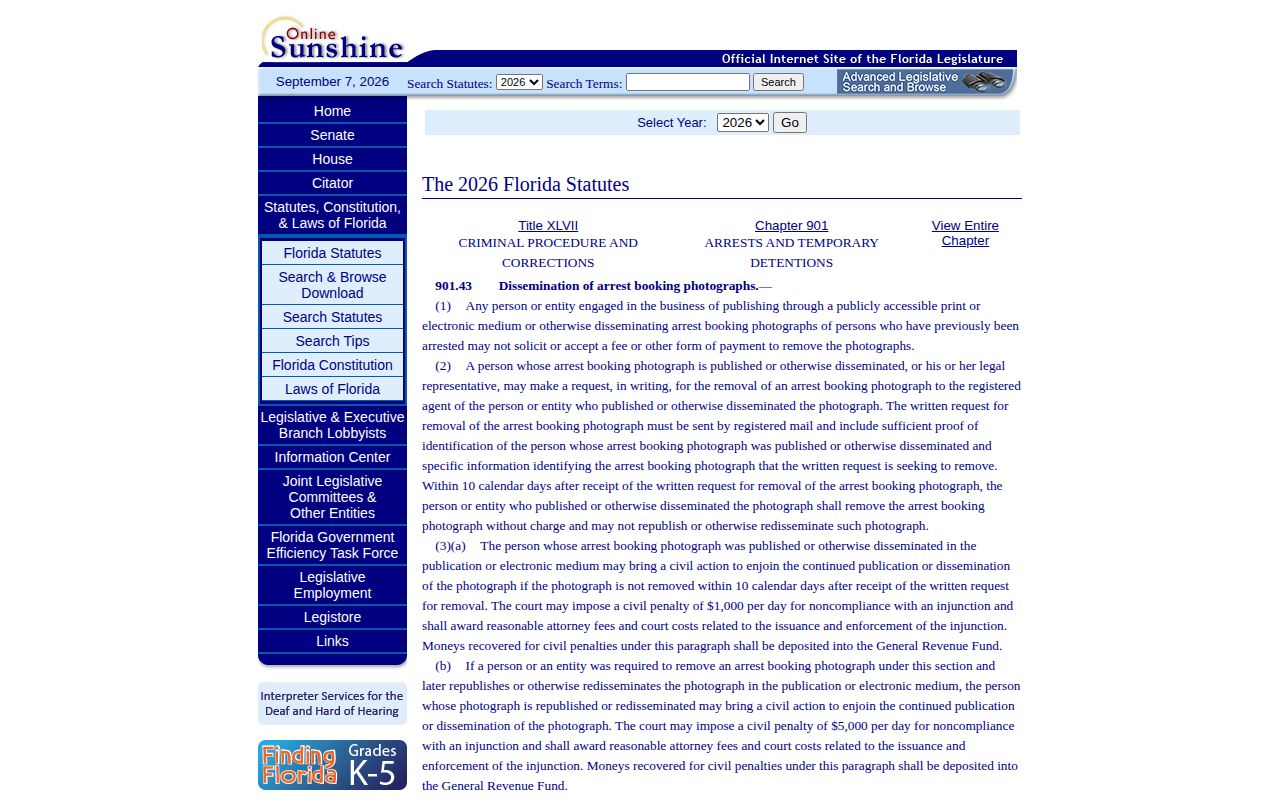
The statute should be checked before trusting a publisher summary or sales claim.
Correcting Collier Arrest Photos
Fixing an arrest photo takes several tracks. There are four: correction, official suppression, publisher maintenance, and search-result updating. Start with the record owner. Ask that office to fix a wrong field or image, and send any court order, exemption, seal, or expunction proof you hold. A corrected source may not clear copied pages. Some unofficial publishers offer free maintenance forms. These are built around the URL, your identity, a reason, and court documents. Their timing and criteria remain private policies. Stick to a free process that fits. Walk away from any service demanding payment just to claim it can erase a page. A search engine's outdated-content tool updates a result, not the agency record.
Collier Arrest Warrants and Wanted Records
Collier County hides its warrant database inside the main CCSO search. The agency posts no separate most-wanted gallery. Pick WARRANT or BOTH, then search a name plus birth date. The Fugitive Warrants Bureau will verify status at 239-252-9655. For a wider view, the FDLE Wanted Persons system can list agency, offense, and warrant data. It also shows descriptors and an image icon. FDLE refreshes the data every 24 hours, though entries can lag or run incomplete.
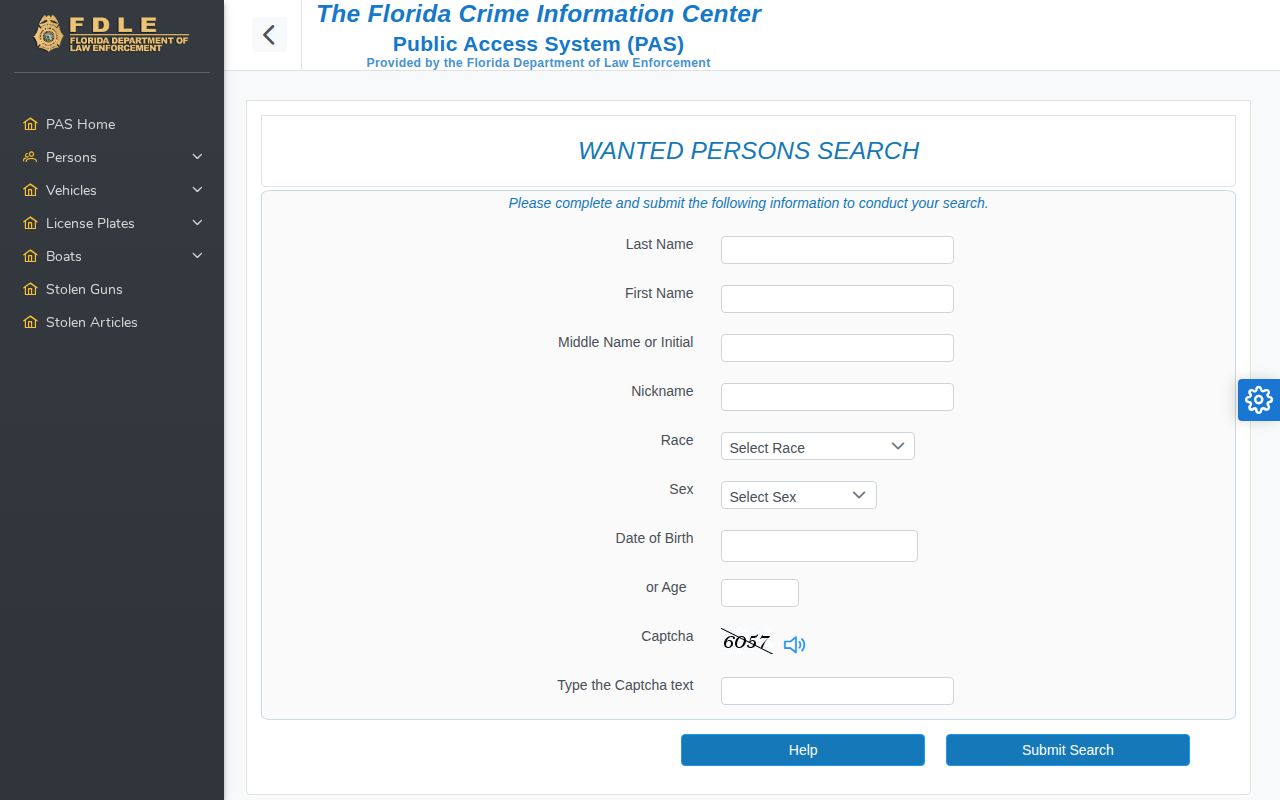
Never approach anyone listed; send tips or call 911.
After a Collier County Arrest
The sheriff's record stops at booking circumstances. After filing, the Clerk of Court keeps the docket. An arraignment is where a charge gets addressed, while bond covers the conditions of release and disposition marks the eventual result. The State Attorney decides what charges move forward. Check the Clerk portal rather than treating the booking charge as settled, and expect confidentiality limits on juvenile cases.
Why can a released person remain listed? Release only changes custody. The arrest entry itself can stay online within the site's posting horizon.
Older Collier Arrest Archives
Old Collier County arrest files don't vanish on a schedule the web controls. The 2016 online starting point is only that, a starting point. Florida's GS2 schedule keeps arrest offender information on file. It stays there until it becomes obsolete, superseded, or loses administrative value. Warrants run on their own timeline.
Central Records is the office to ask. Give staff a name, a date range, a case number, and the arresting agency. Also request any releasable arrest record and booking photograph. Ask which retention series covers the material. Also ask whether it was transferred or disposed. The State Archives and Florida Memory help with historical digging. Neither holds a current Collier booking-photo set.
Florida records guidance ties minimum retention to a record's nature, content, and purpose. An agency can hold a series longer. Audits, litigation, and pending public-record requests must be settled before anything is destroyed. So a missing web result is a records-management question, not proof the material is gone. Ask the custodian for the applicable GS2 item or an agency-specific schedule.
For a historical Collier County arrest request, name the rough year. Add the sheriff administration or jail if you know it. Say whether you want a photograph, a register, a booking log, a warrant, or a case file. Start with CCSO for modern county material. If CCSO says a significant series was transferred, take the same details to the State Archives reference service. Add any collection or accession number supplied. Florida Memory holds many digitized records and photographs. It is not a mirror of local booking data.
The Department of State also publishes a county-jail directory. It lists Naples Jail and points readers to the official Collier arrest search. The directory is not an archive. Its Naples listing does not push the Immokalee Jail Center outside the county system. Both facilities sit inside CCSO corrections. They share the same public search ecosystem.
Keep the agency response, invoice, and released files together. That paper trail separates an official production from an old web capture. It also preserves the custodian's explanation. That covers any redaction, exemption, transfer, or lawful disposal.
When a record ages out of the portal, request the record and its disposition trail. Good wording asks for all releasable booking and arrest records. It also covers the booking photograph and the retention series that applies. Ask whether the source was transferred or lawfully disposed. That keeps a private archive from standing in as the official copy. It also leaves room for lawful redaction, since a schedule can shield certain fields. A missing photograph doesn't mean staff never took one. Removal from one page never erases a Clerk case or later copies.
Collier Custody Beyond the Jail
Different locators answer different questions. FDC handles Florida prison and supervision cases. BOP tracks federal inmates, though it posts no public mugshots. ICE runs its own detainee locator. Someone absent from one system may sit in another jurisdiction or be free. CCSO says immigration status comes up at booking. Deputies run no community immigration sweeps. That creates no public detainer feed. For Florida jail and FDC custody alerts, see the VINELink Inmate Check. It explains registration and its limits.